adventure

Tampilkan postingan dengan label writing. Tampilkan semua postingan

Rabu, 14 Oktober 2015

Writers need winter by Miriam Halahmy


Now that the nights are drawing in and there is much more of a nip in the air, we know here in the UK, that one way or another winter is approaching. So what is winter for and why do writers have any need for winter?
 Winter is the time when everything goes underground but actually doesn’t disappear. Animals hibernate but they don’t die. They take a natural break from the world and reappear refreshed if a bit thinner once the earth turns back towards the sun. Plants also burrow deep beneath the earth. Bulbs extend their roots downwards long before their long green noses point upwards into spring. Trees lose their leaves and appear dead to the world but their root system is still beavering away, keeping them alive, albeit at a slower pace.

This is exactly how it is sometimes for writers. We slow down or grind to a complete halt. We feel uninspired, without a single original thought, line, idea, inspiration in our heads. It is as if our creativity has died and we might thrash about frustrated, post anguished comments on Facebook, eat far too much chocolate or even take to our beds. But somehow nothing happens and we are in terror that it never will again.

This is our winter and it might be taking place in the middle of flaming June.
But does it serve any purpose?
Yes, oh yes, it certainly does.
At those times when we feel the tank is empty, we need to remind ourselves that this might be just what we need. Winter – the hibernation of our words, our writing, our creativity. A time when nothing appears to be happening on the surface but under conscious thought, roots are winding their way around the brain, shoots are pushing here and there, sleep is creating rest, space, respite from the task.
Winter is the time to recharge the batteries, take stock, slow down, allow space, stop fretting and just go with the flow.

I have been in winter for several months this year – and we’ve just had our best summer for years! But in relation to my writing, nothing was happening. I was not writing – a novel, a poem, even a blog post was an enormous struggle. I fretted and groaned to fellow writers and him indoors but no-one could help me except to assure me it would all return.
But would it? I moaned. How could I be sure? And when – for heavens sake when?

Unbeknownst to me my root system was working away silently, sucking in the life force, recharging metaphor, plot, verb and noun, waiting for the right moment to push its nose up through the surface of my mind and flare green and true into the space which my winter had emptied out.

For the past three weeks I have been revving up to start Chapter One. I have written 17 character studies, a two line book pitch, a new title, the beginning, end, inciting moment, crises , climax and resolution for my two POV characters and a three page plot outline. My research is sitting comfortably in its place in my memory.
This morning I wrote Chapter One.
Winter is over and the sweet sweet smell of spring has filled my study.


What do you in winter?

Sabtu, 03 Oktober 2015

"You is well old now innit?" - David Thorpe

No, this wasn't something one of my kids just said to me - but the message on a 20th birthday card to my stepson last week...

It made me think of the challenge a groan-up writer has in making authentic the speech patterns of their teenage characters.

A Mancunian editor this month asked me to look again at the dialogue of one of my teen characters. I've re-read the dialogue and ok, there's always room for improvement, but my question is: what constitutes perceived authenticity?

Firstly, I know plenty of educated teenagers, like my characters, who speak fairly adult-like. They may also come out with "It was like awesome and totally mad" type idioms from time to time, but only when discussing certain things, usually geeky stuff.

They can easily switch to more adult diction when discussing serious topics. Not every kid talks like a south London wannabe rap artist.

What's more if you do any research online on how teenagers are supposed to talk you come across hilarious threads like this on mumsnet, where parents are striving to make sense of their youngsters' slang.

What this thread drives home is that this slang varies dramatically from one part of the country to another, almost reassuringly continuing to maintain regional differences.

What's more, much innovation comes from youngsters themselves experimenting creatively, coming up with either new words or different meanings for existing words. Their ears are hyper-tuned to naunces and new phrases uttered by their peers and by artists they listen to.

It's both a competitive process - being the first to latch onto a new trend - and a collaborative, peer group-gelling one.

I remember it well from my own teenage years. A few of these words go mainstream, many die out in a kind of Darwinian selection process.

The regional variations may explain part of the problem my Mancunian editor is having. So here in South Wales kids still use words like "crackin'" and "oober", but I have no idea what they say in Manchester.

Then again, there's the class angle, and it's more likely that working class (if I can use this term - I tend to avoid the c**v word) are going to use this type of slang than middle or upper class kids, who will speak more proper, like.

Moreover, my book is set 18 years into the future, and I can't possibly know how teenagers are going to be talking then, nor do I want to distract the reader by inventing new slang, which has been a recent trend in literature, triggered by Russell Hoban's Riddley Walker and taken to extremes by, say, David Mitchell in Cloud Atlas, that I consider has been a bit overdone by now.

Actually I think creating authentic teenspeak's got less to do with the slang words used and more to do with what thinking processes and abilities are revealed in speech.

Teenage boys in particular are not exactly renowned for being articulate and expressing or understanding emotions, are they? Then again, some are better than others.

They will reveal themselves by what they don't say as much as what they do say.

So I'm interested in other YA writers' approach to this problem. How do you go about making your characters seem convincing in speech?

Do you base them on existing people you know? Do you make up words? How do you avoid the problem of dating in language, or don't you care? Do you have young readers you test out dialogue on?

Sabtu, 19 September 2015

Change of (Writing) Place - Change of (Writing) Pace: Lucy Coats

I've run away from home. This may sound strange if you know me. Home is usually my writing haven, a place of cool, green quiet, where feral sheep roam the meadows, and the only sound is that of wasps munching on fallen apples.

If only.

Home, as it stands currently, is in the middle of a plague of painters. That means dust, shouting, the smell of white spirit and gloss (both of which I detest), and a general hurmudgeon and flurration of noise, banging about and endless, endless questions.

So, as I said, I've run away.

This is my current writing desk.

A Little Venetian Writing Spot

Yes, yes I know. I'm very very lucky indeed. You're allowed to go a little green at the gills.

On a more serious note, though, I've realised, being here in Venice after a fairly hellish summer, that a change of place can give a massive boost to writing productivity and pace.  Because I was worrying about a whole lot of other things, and allowing them to bite into my writing day, I wasn't getting a lot done, and that in itself was adding to the stress.  Removing myself from all that, trusting that modern communications will cope with any real painterly or family emergency, has made my daily output of words double at least.  I should be well into the second third of my novel by the time I leave here.

A change of place is also good for revivifying the soul.  I'm not counting this as real 'holiday', since I am spending at least 7 hours actually working at a desk/table.  But it doesn't hurt that I'm in a beautiful spot, doing my day job to the sound of gently splashing water, the sound of gondolieri singing and the quiet chug of vaporetti and motoscafi plying their trades up and down the Grand Canal. Not to mention the *cough* wine and pasta.

Just down the road is the Palazzo where Byron lived,  and Henry James's residence is not far away. The literary heritage here lies thick as seaweed on the Lagoon. Maybe it will rub off on me.  I do hope so.

The other (perhaps unsung) delight of being in another country is reading the strange labels on familiar domestic products.  I know that our very own ABBA Venetian expert, Michelle Lovric, has written on this very subject some time ago.  I leave you with my latest discovery - Smac Tot - clearly a product Italians use to discipline unruly toddlers with.  Buon giorno, e in bocca al lupo con la scrittura!


Lucy is now teaching Guardian Masterclasses on How To Write for Children. Next bookable dates October 19th and November 16th 2013
Her new picture book, Bear's Best Friend, is published by Bloomsbury "A charming story about the magic of friendship which may bring a tear to your eye" Parents in Touch "The language is a joy…thoughtful and enjoyable" Armadillo Magazine. "Coats's ebullient, sympathetic story is perfectly matched by Sarah Dyer's warm and witty illustrations." The Times   
Her latest series for 7-9s, Greek Beasts and Heroes is out now from Orion Children's Books. 
Lucy's Website

Follow Lucy on Twitter

Rabu, 19 Agustus 2015

Do YOU Hate 'Strong' Female Characters? - Lucy Coats

Last week's New Statesman article by Sophia McDougall, entitled 'I Hate Strong Female Characters' went viral on Twitter and created a storm in the comments box.  Of course, McDougall was courting controversy with that particular post title, since she is a self-avowed feminist, who sticks up for women on the internet.  But does she have a point?

Many female characters in YA (especially paranormal YA) nowadays are labelled 'feisty', or 'kick-ass' in their book blurb. They are meant to embody all the modern virtues of strong, independent, girl-women who go out and take what they want in life without being constrained by the default 'but I'm a girl so I can't do that' box of the not-so-distant writing past.

As a feminist myself, I say 'Hooray' to all that.  I've much enjoyed meeting Sarwat Chadda's determined monster-stomping Billi SanGreal and (more recently) Sarah J Mass's defiant knife-wielding assassin, Celaena Sardothien, and would much rather promote them as female role models than the wimpish, vapid Bella Swann from Twilight. (Not that I'm advising teenage girls to go out and stab people, but you take my meaning.)  I do wonder, though, in more general terms does all this overt feisty, kick-ass stuff come at the expense of a certain nuance of emotion? Does making the girls we write about 'strong' before anything else come at the expense of depth and breadth of character?  In the frantic quest to make sure our girl heroes do anything that boy heroes can (of which they are, of course, entirely capable) are we losing sight of the fact that it shouldn't matter and we shouldn't even be thinking about it because it ought to be a given?

As McDougall herself says, "No one ever asks if a male character is “strong”. Nor if he’s “feisty,” or “kick-ass” come to that." Well, we don't do we? We're more likely to ask what his character is like. Let's take Standish Treadwell, from Sally Gardner's Maggot Moon. An unlikely hero at best. Is he kick-ass?  Is he feisty? Does it matter? No, of course it doesn't. He is simply himself, a scared, heroic, solitary, nervy, matter-of-fact, dyslexic boy who breaks your heart.

We need to get over and move on past the 'Wow! This princess does kung-fu!" moment in children's and YA books.  Strongly-written female characters are great and entirely necessary, but it should not be what she can do that defines a princess - it should be who she is as a person. Am I alone in thinking this? Do tell!

Lucy is teaching Guardian Masterclasses on How To Write for Children on 7 Sept and 19 Oct 2013
Lucy's new picture book, Bear's Best Friend, is published by Bloomsbury "A charming story about the magic of friendship which may bring a tear to your eye" Parents in Touch "The language is a joy…thoughtful and enjoyable" Armadillo Magazine. "Coats's ebullient, sympathetic story is perfectly matched by Sarah Dyer's warm and witty illustrations." The Times   
Her latest series for 7-9s, Greek Beasts and Heroes is out now from Orion Children's Books. 
Lucy's Website
Lucy's Scribble City Central Blog (A UK Top 10 Children's Literature Blog)
Join Lucy's Facebook Fanpage
Follow Lucy on Twitter

Lucy is represented by Sophie Hicks at Ed Victor Ltd

Jumat, 31 Juli 2015

SAY NOTHING, HEAR NOTHING, WRITE MORE? by Penny Dolan

Do you need a Brooker break too? Journalist Charlie Brooker will not be writing his weekly opinion column in the Guardian for a while.

Private Eye said that Charlie wanted the comments box below his column turned off but that his editor wouldn’t agree. Charlie himself says that it’s because he wants a break from contributing to all the jabber, jabber, jabber he hears around him. Seeing how swiftly inane remarks appear “argument” in comment boxes, I have some sympathy for Charlie’s point of view.


Then, yesterday, I glanced at Mslexia online. A contributing blogger was having a bad time of it with Week Four in Julia Cameron’s  “The Artist’s Way” Course. This is the infamous Reading Deprivation week. For seven days, you do not read at all, not even cereal boxes or emails. Also, I’d guess (in a more modern edition)twitter, face book or blogs like this – no, please don’t go! - or, I suspect, the whole world of audio-books, podcasts and all sorts of screen watching.

Julia’s Rule recognises that reading can be a form of escapism and act as a block to your own creative thoughts. (After all, the book is subtitled a Course in Discovering and Recovering Your Creative Self.)So – having trawled the net a bit -  it seems that, people get so desperate to fill the reading gap that they turn to the kind of practical tasks that leave the mind free for other thoughts. 


Both Charlie and Julia are responding to the same problem. Just now there are so many email demands, so many distractions and so much emphasis on staying connected that turning away feels somehow rude or anti-social, no matter how much we’d like some quiet back to get on with our work.   


We want to know about other people, don’t we?  We need them to connect with us, notice our platform? Yes, yes, but not all of the time. In fact, for quite a small part of the time.

Writers and artists of all kinds need the solitude that feeds them and their work. The solitude can come in many forms: the silence of a rented cottage, the peace of a writing shed, the laptop among the friendly buzz of a café, the studious atmosphere of a quiet library or the security of the kitchen table while the family is busy or asleep. We need somewhere where the daily nags and niggles or calls to meetings or requests to respond won’t shout louder or more strongly than our own ideas. We need time to be in our own deep space, time to get the words down.

As Charlie and Julia suggest, wherever that necessary space is – the place where your words rise to the top of your head – do all you can to find and use it. Be determined, even if it is simply creating silence by shutting a book and avoiding social networks for a while.

Ssssh! That’s better.


Wishing you good words!

Penny Dolan

www.pennydolan,com

Selasa, 28 Juli 2015

Just Do It!


I have just been interviewed for the local press about my latest book. I was asked the old chestnut, "How do you motivate yourself to write?" and I was very tempted to answer rather grumpily (well, it is hot!), "I don't know, I just do it!" But of course I have to motivate myself, in much the same way that I have to motivate myself to get off my butt and exercise every day.

In fact, motivation comes from getting twitchy if I don’t do the two things that make me tick: writing and running. I feel just as agitated if I can’t get out for a run as I do if I can’t carve out time to sit with a pencil and notebook or my laptop.

To quote from Haruki Murakami’s memoir What I Talk About When I Talk About Running, “For me, running is both exercise and a metaphor.”


Writing and running have become intertwined in my life. Until I had read Murakami’s book, I did not know that anyone else felt the same way. I certainly do not put myself in the same category as Murakami, either as a writer or a runner – he now runs ultra-marathons as well as being a world-renowned, best-selling author – however, both activities are part of my daily routine in the same way they are with his; they are part of what keeps me sane and fit and healthy in mind, body and soul. I feel I cannot do one without the other, and I am certainly not in my right mind or my right body if I do not find the time to do either.

In his memoir, Murakami tells of how, before becoming a full-time novelist, he had an active lifestyle, running a jazz club in Tokyo. As soon as he gave that up to concentrate on writing, he realized that he was going to have to find a way of keeping fit, as a writer’s life is, of course, mainly sedentary.

This, too, was my motivation. I had worked in London as an editor and had been used to walking to work, running up and down stairs, going to the gym with friends and so on. I then had two small children after whom I ran as well, but once they were at school all day and I finally found the time to write, I realized that I was no longer moving around so much. And so I took up running.

At first then, that is all it was: a way to keep fit. And, as Murakami says, “Running has a lot of advantages. First of all, you don’t need anybody else to do it, and no need for special equipment.” A lot like writing, then!

Gradually it became apparent how much the two things had become wrapped up together: I would drop the kids off at school, go for a run and, during the run, start to churn over thoughts on writing. Knotty plot problems would often unravel during a run, conversations between characters would unfurl, ideas for settings or descriptions of the weather would come to me as I pounded the pavements in rain, wind, sleet or sun. If I did not get out for a run, I missed it: simply coming home from the school drop-off to sit at my desk felt wrong and had me pacing the house instead of concentrating.

When I first started running I could not run for more than a maximum of twenty minutes without being in pain. I had to make myself go out every day and try to go just that little bit further. I run along a towpath by a canal, so I would use trees or benches or narrowboats as markers to see if I could push myself to go further.

And so it has been with my writing: when I first started writing, I could not write for long periods of time either, and I could not write long pieces. I had to push myself just that little bit further over time.

Murakami has it right, I think, when he says, “What’s crucial is whether your writing attains the standards you’ve set for yourself […] writing novels and running full marathons are very much alike. Basically a writer has a quiet, inner motivation.”

He also says that he likes to run, “the point being to let the exhilaration I feel at the end of each run carry over to the next day. This is the same sort of tack I find necessary when writing a novel. I stop every day right at the point where I feel I can write more. Do that, and the next day’s work goes surprisingly smoothly.”

This is the pace I have tried to set myself too, both in running and writing.

I finally wrote my first long piece of fiction for children after a year of motivating myself to write every day. And I ran my first marathon two years after pushing myself to run further and faster by following a daily training plan.

I am constantly aiming to improve my writing and push myself to explore new ways of writing. Currently I am trying out writing for an older age group. I am also trying to improve my running and to keep it up, no matter what excuses present themselves! At the moment it is so hot that I have to find the right time of day to go out. And writing is always tricky in the summer as I have the children at home, wanting to be ferried to and fro.

But if I go the whole summer without writing or running, my head and body will both suffer. And so, each day, I suppose I do tell myself (to quote Nike, this time!) “Just do it!”, and I always feel better when I do.

www.annawilson.co.uk

Sabtu, 03 Januari 2015

What distinguishes books for adults from those for teenagers? - David Thorpe

What is it that distinguishes a book written for adults where children are the main characters and one written for children, where children are the main characters?

When I am writing for children or teenagers at the back of my mind is always this question of the difference between the two.

Here are the opening sentences of In The Country of Men by Hisham Matar, which was shortlisted for the Man-Booker Prize and the Guardian First Book Award. The narrator is recalling a time when he was nine years old:

"I recall now that last summer before I was sent away. It was 1979 and the sun was everywhere. Tripoli lay brilliant and still beneath it. Every person, animal and and went in desperate search for shade, those occasional grey patches of mercy carved into the white of everything."

The novel describes the gradual discovery by the child of his father's involvement in anti-revolutionary activity and what this means, and his desperate love for his mother.

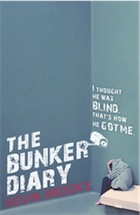
Here are the opening sentences of The Bunker Diary by Kevin Brooks, which controversially won the Carnegie Medal in 2014:

"10.00 a.m."This is what I know. I'm in a low-ceilnged rectangular building made entirely of whitewashed concrete. It's about twelve metres wide and eighteen metres long. A corridor runs down the middle of the building, with a smaller corridor leading off to a lift shaft just over halfway down. There are six little rooms along the main corridor, three on either side."

Much has been written about Brooks' book and whether it is suitable for children, so I'm not going to stray into that territory. You might consider that I have chosen a non-typical example, but many children's books deal with uncomfortable themes and issues.

Both of these openings are physical descriptions which imply a sense of claustrophobia. They perfectly set the scene for what is to follow, which only gets worse.

The two books have several more things in common:

  • there is no happy ending in either of them; 
  • very unpleasant things happen along the way;
  • the main character is not conventionally likeable.

You can see other parallels from these extracts: the language in both is direct, the sentences straightforward. These stylistic points are undoubtedly a requirement for writing for children. But one can equally find instances of quite 'literary' writing in books for children, for example in the earlier novels of, say, Philip Pullman, such as A Ruby in the Smoke.

The Bunker Diary deals with important psychological and philosophical themes, that are uncomfortable to contemplate. So does Matar's book.

One aspect which perhaps distinguishes In The Country of Men (and other novels for adults) from most novels written for children is the retrospective angle: the narrator is now about 25 years old, and the narrative eventually catches up with him. This is less common in writing for children.

Another aspect that might signify a difference is non-linear storytelling, in which the narrative darts around in time. This is, again, less common in writing for children (however I did use this technique in my new novel Stormteller and, whilst I can't think of one at the moment, I'm sure I've read other children's books which do this).

The other observations to make about the difference between them are the setting (Gaddafi's Libya compared to contemporary London) and the degree of sophistication in the form of prior knowledge or experience that is assumed in the writing of Matar's book.

So to answer my original question, all other thngs being equal, the main aspect I am monitoring as I write for children rather than for adults is constantly gauging that level so it is pitched correctly.

I'd be very interested to know what you think about this topic?

David Thorpe is the author of Stormteller and Hybrids.

Selasa, 09 Desember 2014

The Tale of Two Labours - Eve Ainsworth


It dawned on me the other day that writing is very similar to raising children. Bear with me on this, it may sound crazy, but there are parallels.
I guess it goes without saying that I'm a mother - a bit obvious I guess and a bloody tired one at that. I'm not your 'Earth-woman' type. I hated NCT classes and physically recoiled if anyone pushed a childcare manual my way, but somehow, god knows how, I managed to raise two, slightly quirky but still very beautiful-to-me children.


One of my bundles of joy...


I guess my writing is quite similar. I wasn't particularly academic (never had the concentration), I hated reading any 'how-to' manuals, but somehow, god knows how, I managed to produce a book.

And the coincidences do not end there. I noted the following:

  • I fell pregnant the first time and it was a bright and exciting moment (this was long before the morning sickness and other uglies kicked in). You are full of hope and wonder. The world seems a bright and exciting place. You start writing an idea down, it's the same - bright and exciting. You can't stop thinking about it. It's alive and growing.  Everything is good.
  • In pregnancy you think of names. You toil with the absurd and the traditional. Something might grab you and stick. In the early stages of writing, you might gift your book with a title. For me It has to have one. I can't physically write without it. And it has to be right. This has caused me serious neurosis.
  • In both pregnancy and writing you grow. Pregnancy is pretty obvious, especially with my cravings for deep fried chicken and waffles. In writing, if you're like me, you'll eat constantly - grazing like a demented sheep. Crumbs will litter your keyboard like scabby snow. I know this because my bum has slowly expanded to the size of a cow.
  • Then birth, the agonising labour. Sweating and cursing to get that baby free from you.Not so dissimilar to the sweating and cursing at the last stages of the first draft. You start shouting at people (my husband in both cases) and you wonder why the hell you bothered in the first place.
  • Then relief. Love. A feeling of satisfaction - achievement perhaps?
  • That's until the sleepless nights kick in. After childbirth, the baby whines and moans. After drafts, it's me whining and moaning as I wait for feedback. I rethink sentences at night, torturing myself, wondering if I did enough.
  • A slow sense of worry claws at you. You wonder if you're actually any good at this, as you plaster the nappy on backwards (yes, I did do that...). Or re-read your book and hate EVERY SINGLE WORD.
  • You look at other writers/mothers. Why do they seem so 'together'. Why are their babies perfect and behave like they should. How do they manage to write so beautifully. Why can't your writing be like that?  
  • The baby is growing, the baby smiles and you feel good again. As you edit, your book is becoming stronger. You re-read a bit you love and feel good again.
  • Someone tells you how beautiful/well behaved your baby is and you glow. A blogger/reader tells you how wonderful your book is and you glow.
  • You look at the finished product with a sense of pride. You want to tell the world about it.This is what you wanted. This is what you must always remind yourself.


I guess the most important thing of all is that either in writing, or in children - or perhaps both, we have left some kind of legacy. Some sort of stick in the ground.
Although as I watch my little boy trying to walk backwards with a cat basket on his head....this could be a very wobbly stick indeed.


Jumat, 05 Desember 2014

Art and commerce - by Cecilia Busby

Like most published writers, I spend much of my time wondering why I'm not paid more than I am. I'm not sure I signed up for this, I think, as I contemplate my meagre royalty cheques. Of course, it's wonderful to have your books out there, but 'out there' is a bit of a vague designation, encompassing as it does a range from the cramming of multiple copies into every branch of Waterstones to the presence of one lonely copy in an independent bookshop in your home town. And if the surveys are to be believed, more of us find ourselves in the latter position than the former.

Among many blogs and comments on making a living from writing, I found one recently from Emma Darwin which gave me pause for thought. The median income from professional writing - that is, for those who spend the majority of their time writing - is down, according to the ALCS, from £15,450 in 2005 to £11,000 a year in 2013.

That's people who spend the majority of their time writing. Even if they spent only half their working hours writing, that's the equivalent of an annual wage of £22,000, and the likelihood is that they spend less than half not writing, so their annual wage is likely to be nearer £15-20,000. Currently, the UK median wage for full-time workers is £27,000. Advances, as Darwin notes, have steadily fallen over the last ten years, and royalties are squeezed by the sheer number of published and self-published books competing in the marketplace, as well as discounters like Amazon, whose sales result in mere pennies per book for the writer.

So what made it easier to make a living from writing ten or twenty years ago? In trying to fathom out the economics of publishing, I have been haunted by a quote from Andrew Wylie - the jackal of literary agents - who once said that if one of his writers got paid royalties, he hadn't done his job properly. The implication was that he aimed to get such a high advance from the publishers that the book couldn't possibly earn out. Ever.

What makes that an attractive proposition for publishers? It can surely only be the prestige of publishing a well-known and highly respected literary writer. Well, I imagine the commissioning editor saying as he joins his fellow publishing mates for a drink, we've got the latest Martin Amis. And they all turn green with envy while rapidly increasing their offer to Ian McEwan.

Is that how it works? Or worked?

It implies a goal, for publishers, that is not necessarily that of making a profit. Rather it's something to do with having a part in producing the most respected art. (I leave aside whether you think Amis or McEwan represent the highest pinnacles of writing - but undeniably there are literary critics who would claim this to be so...) Certainly, however inflated the big-names' advances got, there was a willingness to support the middle tier of good but less commercially successful writers that argues a focus on quality writing rather than solely on profit.

At some point in the recent past, Amazon (and perhaps Harper-Collins) changed all that. A recent book (One Click: The Rise of Jeff Bezos) on Amazon had some fascinating things to say about Bezos's attitude to the publishing industry. Basically, as the slick young tech-geeks of Amazon started to investigate publishing they realised that the industry was run by editors, who were primarily interested in the writing and didn't pay a great deal of attention to the money. Art trumped commerce.

As a consequence, Amazon started to take them down - and lo and behold, ten or fifteen years later, publishers have had to respond. Now, generally, commerce is starting to trump art - something Ursula le Guin has criticised fiercely in this wonderful recent speech at the National Book Awards.

As le Guin points out, "the profit motive is often in conflict with the aims of art", and when profit (sales and marketing) starts to rule what will and will not be published, then literature suffers. But how to counter this? Can what le Guin calls "responsible book publishing" exist any more in an era where market profit appears to have triumphed over every other measure of worth?

I think it still does, in little niches here and there and in the efforts of editors to circumvent sales and marketing and still get great books published. I think there are still stupendous works of art being produced out there.  But undeniably this is at the expense of authors, who are holding fast to their principles but being paid less and less for what they do.

So what can we do, as writers, in a society that does not value the art of writing?

We can give up writing - and some of us will simply have to, because we can't pay the bills. Or we can try and play the game, and aim our writing closer and closer to what le Guin calls "the production of a market commodity". Or we can carry on being artists, knowing that what we do, interrogating received truths, challenging people's beliefs, encouraging the imagination, has immense value for many people. But not for enough people to pay us a living wage.

There is, however, another kind of perspective on what is happening in publishing.

Some would dispute that the sort of distinction between art and commerce that le Guin posits is valid. Notions of art, in this view, are not universal, they are culture-bound and generally elitist. The upper strata supports 'art' that it enjoys and appreciates (opera) while denigrating commercial art (soap opera), yet commercial art exists precisely because it is the favoured art of the majority. Thus it would be fundamentally wrong and undemocratic to claim elite art as somehow of greater worth or value. From this perspective the actions of sales and marketing teams who refuse to cross-subsidise experimental or literary fiction with the profits from mass-market romance are fundamentally democratic. Money is the arbiter of worth. "Currency", as Lord Cutler Beckett says in the second Pirates of the Caribbean film, "is the currency of the realm."

It's an argument with merits. For the French sociologist Bourdieu, the upper echelons prefer 'high' to 'low' art because of the way class acts as a 'learned' practice, rather than because of any universally valid aesthetics. There is certainly something very elitist about the state subsidising opera when 90% of the population would consider it nothing but caterwauling in costumes. Equally, should the government fund grants for small touring theatre companies whose audiences are in their hundreds?

The debate is not dissimilar to the one we recently had on ABBA about children's reading. Is it right to censure children for reading commercial pap, to see the mere act of reading as not in itself enough, or is this elitist? Should we instead respect the idea that many children prefer undemanding commercial fiction and that it has as great a worth as more carefully crafted children's books? In the money world of Amazon, popular commercial books clearly have inherently greater worth than that those that sell less well, regardless of any judgements of the quality of the writing.

Well, to continue the Pirates of the Caribbean theme, let me nail my colours to the mast.

I believe some writing has more merit than others. Writing as art aims to interrogate the status quo, to provoke questions, to encourage readers to think about the world they live in. It draws on carefully honed craft and on a deep and wide imagination. I believe the more people that are encouraged to read or have access to this kind of writing, the better for society as a whole. I believe commercial considerations do not always favour writing as art, because it is often challenging, unsettling, difficult and it takes time to get right - but it changes readers, and inspires them, and once they 'get' it they will seek out more of that kind of art in all areas. They will be more questioning in their daily lives, more open, more imaginative, and they are more likely to challenge received wisdoms. This is a good thing.

Let me just make it clear though - when I say writing as art, I am not upholding the 'high'/'low' art distinction, which would see le Guin's science fiction/fantasy novels as a poor second to literary fiction. I am not condemning you all to reading Kafka or Joyce! (Excellent as both authors are). What I would consider 'art' in writing is intelligent, thoughtful, honed writing, aiming to be the best it can be, whether that's the best sort of comic book story or the best fantasy or the best romance. Writing that aims to make its readers engage completely in the world it presents and hence inevitably reflect on the world they live in. Malorie Blackman's Noughts and Crosses is a good example; but also less overtly political books that just give free reign to the imagination - Philip Reeve's Mortal Engines, or Diana Wynne Jones's Hexwood. Luckily, in children's fiction there are some great examples that are both commercially successful and works of art - but it's still the case that the rewards for that great writing are not as high as they were.

So, in the end, maybe we writers have to accept that we are not going to be top earners under the conditions of global financial capitalism. But we can contribute to sowing the seeds of imagination, thoughtfulness, empathy and a questioning intelligence in our readers that will hopefully one day contribute to undermining the dominance of that economic system.

As le Guin points out in her speech,  market-driven capitalism seems triumphant and unassailable. But so did the Divine Right of Kings, once.


Cecilia Busby writes humorous fantasy for children of 7 upwards. Her latest book, Dragon Amber, was published in September by Templar.


www.cjbusby.co.uk

@ceciliabusby

"Great fun - made me chortle!" (Diana Wynne Jones on Frogspell)

"A rift-hoping romp with great wit, charm and pace" (Frances Hardinge on Deep Amber)


Minggu, 30 November 2014

TWELVE DECEMBER DREAMS FOR YOU by Penny Dolan


Grunts, groans, and sits down with a sigh. Yes, I’m just back from the “Christmas Market” in my town. How much boozy chocolate, mulled wine variants and worryingly early mince pies does a nation need? As I walked back, I thought about things that might be useful for you in the run up to the festivities.


So, here’s wishing you:


1. A cunning clock that shifts time about so you can do the writing you need to do.


2. A Light to help you see a clear path through the wintry fogs, mists and gloom of  Plots Gone Bad.


3. A pair of swift Writing Skis, and the skill to use them, so you can speed onwards whenever there’s a clear patch ahead.


4. Exceptionally Magic Ears so you can still hear the words of your Work In Progress way above all the nagging seasonal music and unwanted requests.


5. An Optional Food Fairy or three. Plus a happy flock of Clearaway Elves. For more than one day. 'Nuff said.


6. A Santa Claus who will stop faffing about on cakes, cards and comfy chairs in grottos and  actually bring all those presents on Christmas Eve. Like he’s supposed to, you know!


7. A Cheery Facemask so you can smile at Party Questions like. “When are you going to write a book for adults?” or “We’ve just bought Russell Brand’s Pied Piper. Do you ever have ideas like that?”


8. A Book (or more) so admirable that it will thrill you, please you, bring you knowledge and understanding - without making you weep in desperation at your own feeble talent. Plus bookshelves to fill to your hearts’ content.


9. A Very Large Spoonful of Good Health for you and for yours.  (This one is so important that I’m not even joking.)


10. A Deck of True Patience Cards so you don’t waste too much of your your writing time waiting for your editor/agent/publisher/whatever to call.


11. And a Collection of Good Writing Friends, who will let you grumble and witter on like this . . . and know it’s only half the story. (Thanks! You know who you are!)

12.  Plus whatever else YOU need to wish for, of course.

Have a happy and peaceful December, everyone!