adventure

Tampilkan postingan dengan label the art of writing. Tampilkan semua postingan

Jumat, 27 November 2015

Experimental writing, by Leslie Wilson

From time to time people say it might be a good idea for authors to take on board the way in which other media work, and incorporate it into their writing mode. I am impressed by this, and thought I might try it. I’m thinking about the kind of tv programme that not only shows its subject matter, but also breaks to show the preparations for filming, the presenters and other programme-makers in their time off, etc. So I wondered how a work of fiction would function in this way. I thought I’d use my own novel Last Train from Kummersdorf to illustrate the modus operandi. So: here goes.


They were rolling the blankets up when the old woman got down out of her waggon and went into the trees to do her business. Coming back, she called out to them.
‘Good morning. Are you off already?’
On the off-chance, Hanno asked: ‘Have you got any sausage? For another fag?’
Frau Rupf hesitated, then she winked at Hanno – she had a soft spot for him, he did right to be cheeky. Stealthily, she walked to the waggon, fished about among the sacks, did something in there and came to him with her hands behind her back. She winked again.
‘Which side?’
‘Either,’ said Hanno. He wasn’t going to play children’s games.
She showed him a good piece of sausage, about two centimetres thick, ten centimetres wide, real meat, pocketed with fat. Worth a fag, there was enough for him and Effi both. But old Rupf wasn’t after cigarettes this morning.
‘Give me a kiss.’ Her voice had gone soft, sentimental.

End of the day! Leslie goes into the kitchen and meets her daughter, Kathy, who’s at home, having returned from two years’ VSO in China. She’s doing work experience at Oxfam and financing herself by doing part-time work.
Leslie: ‘How was Autotrader?’
Kathy: ‘Someone got really angry with me. It wasn’t even anything I’d done! He said his advert hadn’t appeared in the paper. What’s for dinner? Shall I help you?’
Leslie: ‘Thanks. We’re having chicken provencale. Can you chop some peppers? You’re really good at that?’
Kathy (fetching chopping board and knife): ‘How’s the book coming on?’
Leslie: ‘Not bad at all. I’ve got to chapter ten, now. They’ve just spent a night in a wood and met some of the other main characters. Frau Rupf. She’s from Silesia, you know, where Grandma came from…’
Fadeout. Next day, Leslie is at the keyboard again, typing busily.


He kissed her old dry cheek, thinking he was only doing it for the meat, but then he found himself half-liking her. She had guts.
‘Now go away,’ she said. ‘I don’t want my daughter to know what I’ve been up to.’
They ate the sausage on the way back to the westward road. It was wonderful.
‘I’m not going to look like that when I’m old,’ said Effi.
‘How can you get out of it?’
‘Face-lifts.’

At this point, Leslie tries to print and discovers that there’s no ink left in the printer. She rummages in the drawer and discovers that she hasn’t, after all, got a spare ink cartridge. We see her go out, go to the car, open the door and drive off.
In Office World
Leslie: ‘I’m looking for one of these ink cartridges, but I can’t see one out?
Shop assistant: ‘I’ll go and look for you.’
Focus on Leslie.
Leslie: I’m feeling really frustrated because I want to be writing more than anything else, but any time I get among stationery, I still have to look and I want to buy all kinds of crazy things, like these nice heart-shaped post-its -’
Assistant returns. ‘Here you are.’
Leslie: ‘Thank goodness for that.’ Goes to checkout. View of nice pink heart-shaped post-its going towards the till..


There were hardly any refugees on the road yet, but after a while they heard an engine running behind them and turned round to see a big silver car, dulled with dirt. There was a woman in the back wearing furs, you could see her felt hat inside the ruff of fuzzy darkness, a curl of smoke, a pair of made-up eyes. The driver blew his horn at them.
‘Lucky bitch,’ said Effi. Look at the fur coat. Sable. One day I’m going to have a coat as nice as that. Hey, d’you think it’s Eva Braun?’


Leslie suffers a total failure of imagination.
Leslie: ‘Only one thing for it. I need chocolate! Searches in fridge. No chocolate. Searches in storm porch. Still no chocolate. Now she gets her handbag and cycling clothes: if she cycles to the shop for chocolate, probably it will burn up the calories she gets from eating it.
In the future such novels will be able to include mini-MRI scans of writerly thoughts going round in her head as she cycles down the hill to Waitrose. After all, we do a lot of work when not at our desks.


And sometime, maybe, we’ll get back to the story...

Minggu, 11 Oktober 2015

IN YOUR OWN SWEET TIME - Malaika Rose Stanley


Do you write fast – or slow?

I have to admit that I am very slow. It’s not because I don’t have a routine or a good work ethic or that I’m an ill-disciplined procrastinator. Whatever else I do, I write (almost) every day and I can work to precise word-counts and meet tight deadlines when I have to. But when I don’t have to, I write slowly.

First, I have to dream my way into a story, carefully feeling my way as I go. Then I have to write a detailed plan – not that I ever stick to it - but just so I have something to refer to if I lose my way. Even when I’ve actually started writing, I edit and re-write my work as I go along – seemingly against the advice of every writing expert on the planet.

They argue – with the indisputable support of a handy mathematician or calculator – that even if your word count is only 500 words a day, at the end of a year, you will have written the first draft of a novel – or two!

Of course, this approach ignores the days spent editing when your word-count ends up as a minus number and the days spent doing research or background reading or publicity or visiting schools or – heaven forbid – playing Scrabble, drinking wine and catching up with friends. As far as I’m concerned though, it all counts.

Am I alone? Surely, I’m not the only person who lives life – and writes - slow.

My latest novel, SKIN DEEP, was published on 1 September 2011 by Tamarind/Random House. The next one will be along in 2013.

Jumat, 09 Oktober 2015

Write the theme tune, sing the theme tune... - Elen Caldecott

As people who know me well will know, films come a very close second to books on my list of 'things I'd rather be doing'. I go to the cinema usually once a week and will also watch a couple on LoveFilm or on TV too.

Last week's cinema expedition was something different to the norm. I went to see Red State by Kevin Smith. When I say 'by' Kevin Smith, that's pretty much exactly what I mean - written by, directed by, distributed by...that Kevin Smith. Even the funding for the film was raised by Kevin Smith from private donors. Once the film was made, most of his marketing was done via podcasts, personal appearances and literally schleping the film from city to city - at least in the US. This film is more the vision of one person than any I've seen in the cinema outside a short film festival.

This kind of one-man-band of filmmaking is a close equivalent to serious self-publishing. Like buying a self-published book for cold hard cash, I went to a cinema, paid the standard fee, bought popcorn, watched ads and trailers and then saw a product that came to me pretty directly from the mind of its creator. It was free of influence of studios, focus groups, distributors etc. All the people who are usually accused of forcing directors to churn out guff like Final Destination 5 (my own personal title-stuffed-with-irony favourite). The publishing parallel to those people might be the bookchains who don't like a book's cover, or the marketing dept who don't like the main character's ethnicity. The people that are usually the subject of irate rants on writers' forums.

So, what was a 'self-published' film like?
Well, quite good.

I had thought about posting the trailer here...but it's 18-rated and so it could get me into trouble. It's on YouTube if you want a look. In a nutshell, three boys get kidnapped by a family of fundamentalist Christians and are punished for their perceived sins. Like I say, it's an 18. In the hands of a studio it would probably have been a shlock-horror, perhaps with a bit of torture porn thrown in. In the hands of a single-voice director, it is something less polished, but also strangely satisfying. Kevin Smith actually has something to say and he uses the actors as mouthpieces for his idea. Admittedly, there are over-long speeches and it's disconcerting not to have a clear hero. But it was also very refreshing indeed.

Auteurs aren't new, of course. But for most of my cinema-going life, they've been the stuff of myth. I'm much more used to studio-productions. Just as I've been used to publisher-led fiction. I wonder, will we find that the self-publishing revolution that's taking place around us will lead to auteurs making their mark in our industry too?

www.elencaldecott.com
Elen's Facebook Page

Selasa, 06 Oktober 2015

Keep Silent by Lynda Waterhouse

I keep his picture by my desk. His dark eyes stare at me. His hair is long and he needs a shave. His lips are set in a determined downward curve. He is trying a bit too hard to look like he doesn’t care about me and yet he is carrying a placard which he is defying me to read and consider. Upon it are written the words,
Keep silent, unless your speech is better than silenceThe man in the picture is Salvator Rosa (1615 -1673), artist, actor, philosopher, and possible bandit. I first encountered him at The Wallace Collection which owns his painting of Apollo and the Cumaean Sybil. The self portrait is usually in the National Gallery but can now be seen in a wonderful exhibition of his paintings at Dulwich Picture Gallery.
Keep silent, unless your speech is better than silence
His advice seems to run counter to all the pressure on me to twitter, buzz, hum and fritter my words and myself in order to get myself ‘out there’. Should I deck myself out in the literary equivalent of a meat dress and get noticed?
Keep silent, unless your speech is better than silence
John Le Carre recently said in a recent interview that he likes to be the quiet guest at the dinner table. If we are expected to ‘make a noise’ all the time are we sacrificing a bit of our creative self? After his death Salvator Rosa became the darling of the Romantics because he refused to paint to order. He painted scathing pictures showing Fortuna scattered her riches on those that least deserve them. I would love Fortuna to scatter some random riches and recognition in my direction.
Keep silent, unless your speech is better than silenceHis words challenge me as I write. Silent images flicker on the screen of my imagination over and over again and I dance with them until they are reformed into words. Then I can only hope that these words can successfully transmit those images and emotions into another’s imagination so that a story or a poem comes into existence. A story that is better than silence.

Minggu, 27 September 2015

Horsehappy Values - Andrew Strong

My gap year was very conservative. I sat in a kitchen of my flat above a glaziers in Acton, west London, and read Ulysses. It was a rite of passage. While friends were driving across Nevada, paragliding over the Sahara, or tunnelling out of Broadmoor, I was turning the pages of Joyce’s voluminous book. Each morning, after my flatmates had eaten their breakfasts of last night’s cold kebab or yesterday’s brown rice, I pushed the pizza cartons and the foil containers of chop suey on to the floor, spread out the readers’ guides and set to work. It took me the best part of the twelve months.

A year later, when Pete appeared at door, lean, deep tanned, a far away look in his eyes, I was yelling “Yes! Yes! Yes!” Pete had been all the way around the world and returned to find me where he’d left me. The only part of me that had done any travelling was my eyes.

When I mention to friends that I want to write the Ulysses of children’s novels they look at me as if I’ve just asked them to fire a nail gun into my knee. “What would you want to do that for?”

I used to feel slightly ashamed and embarrassed that I love James Joyce. Finnegans Wake may be the most difficult novel of all time, but its mad ambition thrills me. So now it's time to come clean.

My day job is a headteacher. I spend my weekdays surrounded by young people. I have two teenage children and they regularly fill the house with their tall, grinning friends. They are all super smart, witty, much, much brighter than I was at that age. They simultaneously play computer games, watch TV, write music, design crazy stunts to film and put up on YouTube. They are texting and listening to iPods, having six different conversations. Watch them, shoved together in the same room. They are not just capable of multitasking, but of multi-dimensional multi-tasking. They seem to live permanently on several levels. Their language is a melt of references, of quips and quotes, facts and nonsense from The Simpsons, South Park, QI, and stuff they randomly bite off the internet and from each others’ Facebook pages. Their chatter skims across media, and across decades. They dabble in accents, and throw chunks of Welsh, French or Spanish into their chatter. Yes, it sounds like the incomprehensible noise of Finnegans Wake. It’s clever, funny, and somehow has its own inner logic.

They are, therefore, in a much better position to understand a book as something other than a vehicle for the third person, past tense narrative.

Indeed, the traditional form is something that must seem not just quaint to them, but archaic. In a recent Guardian article a certain Mr Philip Pullman makes a silly fuss about the present tense, suggesting writers should further exploit the richness of the past tense, and so on. A few pages before Mr Pullman’s piece, Tom McCarthy is interviewed about his novel C. Shortlisted for the Booker Prize, it is written in the present tense. Compared to Pullman's dusty lecture, McCarthy sounds thrilled and excited by the possibilities of fiction.

McCarthy clearly wants to reaffirm the case for modernist literature, for something more than the traditional ‘sentimental humanism’ as he puts it. If the vast majority of the adult population doesn't have a taste for experimental fiction, perhaps it is this generation of young people that are the first to be ready for novels that play with notions of voices, persons, perspectives and tenses, of stories that are a tangle of parody, pastiche and genre shifting.

And when e-readers really take off, there will be an infinity of dimensions to explore.

The book is dead. Long live the book.

Minggu, 20 September 2015

Pictures on a Page: Penny Dolan


Encircled by light, a boy flies above the stage, mesmerising the audience. Who is he and how did he get there? The boy, I know very soon, is called Mouse. That aspect of my young hero appeared in my head some time after seeing flyers swooping on wires at the theatre. The image was bright and clear at the centre, but fuzzier around the edges.

So I nursed the picture, gently asking questions. “What exactly is happening here? Why? Where? Who are you, Mouse? How do you feel, way up there? Who do you know? And who knows you?” Gradually the picture grew. Mouse was a boy who was not much afraid of heights.

Other images hidden in my mind woke, stretched themselves and grew into other scenes in the story sequence.

Bulloughby’s crumbling school, far beyond sight of any other building. Nick Tick’s clockmakers shop. The canvas walls of Charlie Punchman’s puppet booth. The glorious golden auditorium of Hugo Adnam’s Albion Theatre, and more, all snipped from somewhere in my memory then reshaped and stitched into Mouse’s tale.

These were like the big beads on my story thread. Between them I needed the small but essential beads, and often I had to re-arrange the order or polishing dulled ideas until the pattern was as good as it could get.

I would love to plan, but my writing process is always visual. I have to wait for the picture. Does this habit come from bored hours staring at the narrative art hanging on classroom walls? Certainly, that Naughty Wet Lady Ophelia stuck in my mind more vividly than the meek, haloed virgins.

The best narrative paintings, story-wise, were seeped with possibility, with “what might be”. I once heard Quentin Blake, whose drawings are so beautifully alive, say that he tries to illustrate the moment just before the action happens. As a writer and story-maker, I’m greedy to make that moment, and to fill in the gaps between too. I want my words to make pictures in other people’s minds.

So where do your stories begin?


A BOY CALLED MOUSE is published by Bloomsbury Children’s Books on 4th October.

Kamis, 20 Agustus 2015

Reduce, Reuse, Recycle - Elen Caldecott

I live near an urban cemetery that is a gothic mix of briars and brambles and burials. Just now, the brambles are coming into fruit.

I wondered if it’s OK to eat blackberries that grow on top of graves. It seems a bit macabre; puts me in mind of an Asian horror. I fretted about it for a while. Then I ate one. It was too sour, so the decision is postponed until next week.

I mentioned my cannibalistic concern on Facebook (as you do). Suddenly, everyone was telling me about their own people recycling experiences – damson jam in Highgate; cider from orchard-burials; Ellen Renner kindly pointed out to me that if I drank the water in Bristol, it would have been through countless bodies before mine (thanks, Ellen). It got me thinking about how much is recycled in our lives and, as creative people, how much we re-use what’s come before.

I’ve written an urban misery-fest that will hopefully come out next year. In it, a young girl is reunited with her father. I couldn’t resist giving her the line ‘Daddy, my daddy’ when she sees him. I expect you all recognise the quote. It never fails to bring a lump to my throat and I felt that my story is enriched by the borrowing. I love to stumble upon these recycled lines, phrases and images in other peoples work. Not only does it make me feel clever, because I recognise a bit of re-hashed King James when I see it, but also, it makes the writing we do now seem like part of a longer tradition. It gives literature a kind of stability. I especially enjoy it when I find it in unexpected places – I was reading a bit of chick lit the other day and the heroine moaned about a day being a suffering of ‘slingbacks and arrows’. Some novels borrow minor characters from other works and bring them to the forefront; I have Adele Geras' Dido on my to-read list for just that reason. It turns out – having read yesterday’s post – that Celia Rees has been busy recycling too. On a larger scale is the classic retelling, such as Mal Peet’s interpretation of Othello in ‘Exposure’.

Words, phrases, plots and blackberries all come around again to make our lives that bit richer. Do you have a favourite example of literary recycling? Or failing that, maybe a good bramble recipe in case I get over my squeamishness.

For those who like to see a good quote in situ:


www.elencaldecott.com
Elen's Facebook Page

Rabu, 19 Agustus 2015

'"Big" is a Banned Word in Our Classroom...' Musings on Creative Writing and SATs - Cecilia Busby


I'm butting in here, slightly, as someone who's not normally a regular contributor to ABBA. But there are some things that have been brewing in my head for a while to do with writing in schools. The recent controversies over Michael Gove's new reforms, pushing yet more formal grammar down the throats of the nations primary school children, has caused them to boil over into a blog post. Luckily ABBA was at hand to give me an outlet!

When I was at primary school (a long time ago it seems now!) teachers regularly read stories to their class - lots and lots of stories - picture books, short stories, fairy tales, longer books over a week or more. Children learned the many ways of creative story-telling by listening to and living in these stories. And then they were encouraged to write their own, whatever and however they wanted – just stories. Glorious, creative, fun, mad, rambling stories, meant to be simply enjoyed.

One amazing afternoon, when I was eleven, the teacher from the other, companion class to ours read us the whole of Paul Gallico’s Snow Goose, start to finish. He had a soft Scottish accent and a wonderful reading voice, and the whole class spent that afternoon in a completely magical other place, of snow and bleak landscapes and tears. Every single girl in the class instantly fell in love with him, and I bet no one there has ever forgotten it.

We were not expected to critique these stories – we were never asked to identify the genre, or discuss the foibles of the main character, or identify the metaphors being used in the passage we’d just been read. That particular ruination of stories lay in the future, at secondary school. We were just allowed to enjoy them, absorb them, be inspired by them – and slowly learn how stories worked and what they did by listening and reading.

Gradually, children, as they read more, as teachers gently pointed out the need for full stops and capital letters, and encouraged correct spelling, produced more coherent, grammatical sentences, more sophisticated descriptions, richer vocabulary. But they did this at their own pace, in relation to the kinds of books they were reading, and as their own story dictated. My best friend and I went through an intensely poetical phase in the third year of junior school in which our writing was essentially nothing but strings of adjectives, each of us out-doing the other in flights of fancy (‘the white, pale, glittering diamond snow drifts gently, mounds of sparkling coldness heaped in silvery piles’…) 

My teacher was always nice about them. She was still nice when I became obsessed with Biggles, and everyone in my stories started ‘observing wryly’ or ‘laughing carelessly’ instead of ‘saying’ anything. She let me develop a writing style at my own pace, and in relation to what I wanted to say, and just enjoyed the roller-coaster ride – and as a result what I never, ever felt was judged against any kind of externally imposed standard. We were praised for the creativity we showed, for making the teacher laugh, for the ideas in our stories. We weren't told that our story had achieved a level 4A or 3B, and what we needed to do to get the next highest level was use more 'interesting words' and include several similes. At eleven I wouldn't have recognised a simile if it had come up and hit me on the head (and that's a personification of a simile, by the way, and so a kind of metaphor, as most eleven-year-olds would now be expected to tell you...) But I'm sure I used them, all the time - not consciously, to impress examiners, but joyously, because they enabled me to describe what I had in my head in exactly the right way.

What has happened in the intervening years is a kind of madness sparked off by an increasing tendency for the bureaucratic state to value surveillance over trust. Instead of assuming that professionals could be trusted,  the state started to ask for evidence that its practitioners were providing 'value for money' and the only evidence that seemed to 'count' was numbers. In education, this meant the National Curriculum, imposed standards, testing, and league tables. I have watched my children go through the primary system, one after the other, and for a while I trained to become a primary teacher myself. I now go into schools as an author. All those experiences have left me increasingly sad and angry at the effect that these changes have had on children's relationship to literature and writing.

To take writing. In the attempt to codify and externalise the standards that children could be judged by, academics and policy-makers took the processes that happen as children develop their writing skills (development of wider vocabulary, greater use of figurative language, more accurate grammar, better spelling) and made them explicit teaching goals which were then  tested. Inevitably, with schools and children then judged by these tests/standards, teachers were forced to make explicit to their pupils the grounds on which they had succeeded or 'failed' to reach certain levels; to drill them in the 'right' techniques to do well in the tests. This is even considered by Ofsted to be good teaching practice - woe betide a teacher who doesn't put the 'learning goal' clearly on the board for each lesson, or whose pupils don't know exactly what level they are working at and how to get to the next rung of the ladder.

The example that really brought this process home to me happened when I was visiting a year 6 class in a small village primary in Devon a few months ago. Talking about the characters in my book, Frogspell, I read out a description of Sir Bertram Pendragon, 'a gruff, burly knight with a deep voice and a large moustache' who also happens to enjoy whacking his enemies with his 'big sword'. 'Can I just stop you there?' said the teacher. 'The word "big" is one of the banned words in our classroom. What do you think of that?'

I was temporarily speechless. I recovered enough to make it quite clear that I didn't think any word should be banned, and that sometimes 'big' was exactly the right word for the job you wanted it to do, but it made me think anew about the results of a testing regime that gives higher marks to the use of more complex vocabulary. The inevitable end point is that children are told not to use the word 'big' if they can possibly shoehorn in 'enormous', 'gigantic', extraordinarily excessive' or 'mountainous'.

The result is that writing, for children in primary schools - especially at the upper levels - is now a very much more conscious activity. Their heads are full of instructions: use 'interesting' words; use similes and metaphors and personification; use commas and semi-colons if you can; never, ever use the word 'big'. That they manage to find any joy at all in writing in the face of these multiple goals to aspire to and pitfalls to be avoided is a tribute to their irrepressible creativity and passion.

I recently read a lovely piece about writing by a fellow social anthropologist, Tim Ingold.
The full text is here: http://www.dur.ac.uk/writingacrossboundaries/writingonwriting/timingold/

Ingold bemoans the universal use of the computer for university students' essays, and writes about how he encourages his students to put pen to paper, and feel the flow of writing as a flow, from brain to hand. Writing is not a technical fitting together of ready made bits and pieces in a way that will gain approval from an examiner/teacher, it is a craft. It's more akin to carving a knotted piece of wood than putting together an IKEA flatpack. Ingold likens it to hunting - you don't go from A to B in a straight line: 'To hunt you have to be alert for clues and ready to follow trails wherever they may lead. Thoughtful writers need to be good hunters.'

Introduce the computer, and its associated cut-and-paste techniques, Ingold argues, and immediately 'students are introduced to the idea that academic writing is a game whose primary object is to generate novelty through the juxtaposition and recombination of materials from prescribed sources'. This is word-processing rather than writing, and, as he says, it 'is a travesty of the writer's craft.'

The National Curriculum, and SAT tests, seem to me to have done the same thing to primary children's writing. They are being taught that writing is a process of exemplifying one's mastery of certain 'techniques', juggling and fitting together approved words and phrases like a puzzle (like a pre-designed Lego set). That we are teaching youngsters at this boundlessly creative age that writing is a kind of engineering makes me want to weep.

Of course, there are still many, many great teachers out there, who inspire and encourage their pupils, and read to them, just as I was encouraged, inspired and read to. But they do it not against a background where their judgement is key, but against one where they themselves are judged and tested, and often found wanting. Gove's 'reforms' look set to exacerbate this problem, and increase the number of demoralised teachers found wanting because they haven't drilled their pupils sufficiently in the recognition of gerunds and participles, or made it sufficiently clear that 'big' is a banned word.

I'd like to end with a suggestion. There' a great scheme out there, called Patrons of Reading. The website is here:
http://www.patronofreading.co.uk/
The idea is that a local author links with a primary school and makes a relationship with them over a year, encouraging reading, encouraging writing, and generally being a kind of 'reading mascot'. I think it's a brilliant way to bring the experience of real writers into schools in a more long-term way than  just a single 'author visit'. I'm currently touting my services to my local primaries. And maybe if it takes off, there'll be a few more people out there giving children permission to use the word 'big', if the word big fits the bill.


Cecilia Busby was trained as a social anthropologist; she now writes for children as C.J. Busby.

http://www.frogspell.co.uk/ ("Great fun!" - Diana Wynne Jones; "packed with humour" - The Bookseller)

Twitter: https://twitter.com/ceciliabusby

Facebook: https://www.facebook.com/pages/CJBusby/509258069106074?ref=hl

Thanks to Joan Lennon for letting me take her ABBA slot for my musings!


Serendipity - Celia Rees

I'm not superstitious. I walk under ladders, I stroke black cats when they cross my path. No, I'm not superstitious except when it comes to my writing. I carry amulets, I get very upset if they disappear. I don't tempt fate with loose talk about what I'm doing and I believe in serendipity. I have this in common with my friend, Linda Newbery. Her book, Lob, is on the Guardian children's fiction prize longlist, and richly deserves its place. She explains in an interview: Following the Walking Man, guardian.co.uk 9th August, 2010, how this book was inspired by seeing a man walking the roads between her home in Northampton and Oxford where she was working. He appeared at different points in the book's life: on the day she proposed the idea to her editor, the day after she handed in her typescript, her last sighting of him was at a bus stop in London. She called him Lob. I remember talking to her about this before the book was published and telling her that I used to see the same man, or one of his tribe, walking the main road between Birmingham and Coventry. I said I'd look out for him. Linda keeps a look out, too. She carries a signed copy in the glove compartment of her car, ready to give to him when she sees him again.


I have to report a sighting. The day after I read her interview I saw him walking up Putney High Street, swathed about with bags of different sorts, pushing a trolley, making his way between the shoppers and the buggies. Putney High Street was the old road to Portsmouth and that was the way he was heading, out of the bustle of the town, up onto the ancient heath. I hope it's a good sign for Linda.


I have my own examples, which is why I could identify so closely with Linda and her walking man. My latest novel, The Fool's Girl, was inspired by Shakespeare's play, Twelfth Night, and has Feste as a character, the Fool of the title, The first time I had to talk about the book in public, in Cambridge on a warm spring day, I saw this street performer on the way to the venue. My own serendipity. I can't pass a street performer now without giving him or her some money. Feste would never forgive me.

I'm hoping that serendipity is still working for me. On the day I was thinking about writing this blog, I went to the library and on the notice board there, I saw a flyer for something that was a clear message about the book that I plan to write next. I'm not going to say what it is, because that would be tempting fate.


Going Dark: Abandoning the Social Networks - Lucy Coats

What?  Abandoning the social networks? Me?  For those of you who know me--yes, I hear your scepticism.  For those of you who don't--trust me, for me to talk about abandoning Twitter and Facebook is like a chocoholic abandoning all cocoa products.  So why would I do it?

Well, in the Twitter world, there is a thing known as #goingdark.  This signals that one will not be around for a while--and usually, if a writer uses it, it means that they are going into self-imposed purdah to work on a project, to edit, to think.  In short, to do what writers do best--create. 

This, of course, is what I'm talking about--not so much abandoning the networks, as being absent from them for a while (come on, did you really think I would jump ship?).  I had a good reason for being absent for a whole month* recently--a YA novel to finish.  When I'm in that race to The End, I need a head uncluttered with any distractions.  My brain somehow shifts to some strange space off to the left of my eyebrow, and I walk through the world in a daze, entranced by my characters--wanting to talk only to them.  It's an intense sort of conversation, and while I love chatting to my Twitter and Facebook friends (some of whom are Real World friends, and some who I know only in the Virtual World), this stage of writing, for me, is a particularly private time, and so I shut myself away with my characters and go dark for as long as it takes.

Now that I've 'finished' and am at the rewriting and fiddling stage of my novel, I'm dipping a toe in the social networking waters again. Have people missed me?  Doubtful.  Have I missed much? If it's important enough, someone will tell me.  One thing I'm glad I didn't miss this week is the publication of Nicola Morgan's wonderful, witty and eminently useful and sensible guide to using Twitter.  It's called Tweet Right and if any of you were thinking of venturing into that particular corner of the social networking playground, I'd strongly advise reading it before doing so.  Now that I AM back, I've signed up to be one of Nicola's Twitter Angels.  So if any of you want to come and see what it's all about, I'll be happy to help and advise.  You can find me at @lucycoats.  Unless I've gone dark again.  In which case, you won't.

* a whole month is a LONG time for one who Tweets and Facebooks much more than she probably should each day.

Lucy's latest series Greek Beasts and Heroes is out now from Orion Children's Books

Selasa, 18 Agustus 2015

How does your mind work? Lynne Garner

I’ve always assumed everyone sees the world as I do. They see what I see, hear what I hear and then ask themselves questions. I was amazed to discover recently not everyone does.

Now a week or so ago whilst sitting in the sun outside a local family friendly pub with friends, I watched as kids played, dogs panted in the shade and people generally enjoyed each other’s company. As I watched the scene the words of Rudyard Kipling popped into my head:
“I keep six honest serving-men
(They taught me all I knew);
Their names are What and Why and When
And How and Where and Who”

(From his "Just So Stories" (1902) accompanying the tale of "The Elephant's Child")
The Five W’s (also known as the five W’s and one H) is a formula for creating the ‘full’ story. Used as a checklist it ensures you ask all the right questions:
  • What took place?
  • Why did it happen?
  • When did it occur?
  • Where did it happen?
  • Who was involved?
  • How was it resolved?
Now as I watched an old man share his crisps with an even older canine friend I began to ask myself these questions.

Who was involved?
Our old man and his canine friend.
Where did it happen and what took place?
A house fire.
Why did it happen?
Faulty electrics.
When did it occur?
Just days before in the early hours of the morning.
How was it resolved?
The dog woke the old man from his sleep and led him through the smoke to safety.

I also added a second how, how did they meet?
The old man had found a puppy at the side of the road years before and it had obviously been 'clipped' by a car. Taking pity on it he took it home, cared for it and they've been inseparable since.
I was then rudely pulled back to reality by a sharp elbow in the ribs. “You see the world differently don’t you,” said a friend smiling, “your brain is wired differently. You ask yourself questions and then make up the answers.”
“Doesn’t everyone?” I asked.
“Nope!”
“Really?” I asked, admittedly a little surprised everyone doesn’t ask themselves questions and create new worlds for themselves.
“We see stuff then shrug it off. I can see you mind ticking, storing things for one of your stories,” was the reply.
“How do you not ask questions?” I asked, “don’t they just pop into your head?”
“Nope!”
“Then how does your mind work?” I asked.
“Not like yours,” came the reply followed but a broad smile, “but then I’m not a writer, am I?”
I hate to admit it, but my friend’s right. If I didn’t ask questions I wouldn’t have little mice dealing with issues of friendship (A Book For Bramble) and the pains of growing up (The Best Jumper) running around in my subconscious. I wouldn’t have trolls dealing with up-set stomachs (Dog Did It – due March 2011) or sleep issues (a title I’m working on at the moment). If I didn’t ask questions and come up with my own solutions I wouldn’t be a writer.
Now if you’ve reached this far and want to write but are now thinking ‘questions don’t pop into my head. I’ll never be a writer.’ Thankfully this is one of the few elements of writing you can learn. Simply write down Mr Kipling’s words on several sticky-notes and place them in prominent positions, so you see them every day. Write them on the first page of a small note book and take it with you where ever you go. You’ll soon train your brain to ask those questions. Once you have you’ll surprise yourself with the new worlds and characters you create, the problems you set and the ingenious ways you resolve them.

And finally my musings on that sunny day featuring the old man and his dog will be used, they'll slot nicely into a story that's rattling around in my head. Hopefully they'll give a little more depth to the relationship between two of the three main characters an old man and his faithful canine friend.

So go on ask yourself some questions, you never know where they'll lead you.

Victims of Tokenism? - John Dougherty

When I was young I was a voracious reader, but I never read any books about children just like me. I don’t think anyone had written any.

There were lots of books about children a bit like me. I mean, most of the kids in the stories I read shared my skin-colour, more or less; but they were English. The Famous Five, the Pevensey children, Wendy Darling and her brothers - English, and posher than me, the lot of them.

But that was okay, because all the children on telly were English too. Clearly, people like me just didn’t get to appear in books and on television. Probably nobody from Northern Ireland had ever written a book, or at least not one good enough to go in the shops.

Well, apart from CS Lewis, I was proud to discover; but he didn’t really count - not properly - because according to the potted biography in my Narnia books, he’d only been born in Belfast. Being born somewhere isn’t the same as living there, and it didn’t say anything about him living in Northern Ireland. Maybe his parents had just been here on holiday or something. He’d certainly done all the interesting things in England, like being a professor. And anyway, he’d written a book, and hadn’t I already learned that people who were from Northern Ireland - I mean really, properly from here - didn’t write books? So he can’t have been from here. Not really.

So while I could enjoy books - and I did, believe me; I did - something inside me just accepted that books were about English kids, and written by English people.

To be fair, there were a few non-English children in some of the books I read. There was Prince Paul in Enid Blyton’s Secret series. He was African - although, as we learned approvingly in The Secret Mountain, his behaviour in the face of danger was just like an English boy’s, so that was okay [Note: see correction in comments, with thanks to Saviour Pirotta]. And I think Donald and Jean in Borrobil were Scottish. I liked Scottish people, probably because they were pretty well the closest you got in fiction to Northern Irish - apart maybe from the odd thick Paddy in sitcoms, and they really didn’t count, because they weren’t like real people at all.

Oh, and there was Nico in The Luck Of Troy. He was Ancient Greek.

I did come across one novel about Northern Ireland, when I was a teenager and they were just starting to invent Teen Fiction. It was called Under Goliath, and it was really good. Of course, it was about the Troubles, because the only time you ever saw anything about Northern Ireland it would be about the Troubles. Even if to me it was about being miserable, and bullied at school, and escaping into magical worlds any chance I got, I understood that to - the people who wrote books and made TV programmes - Northern Ireland meant the Troubles.

It was only a few years ago that I came across a series of books about children like me. By that point, of course, I wasn’t a child any more, but my inner child still was, and he was very happy about it. They’re by Sam McBratney, best known for Guess How Much I Love You, and they’re about Jimmy Zest and his classmates. My inner child and I could tell at once that these were children like us, because they said the sorts of things we and our classmates used to say:

“Ah, go on, give us one of your scones.”
“Go and get lost, Shorty.”
“Go away and give my head peace.”
“Just a wee bit, Gowso, I’m starving!”
“Your head’s a balloon, Zesty.”
“Wise up, Zesty.”

None of the children in the books I read as a boy ever said anything like that, nor did the kids on television - even when Grange Hill was invented - but my classmates and I did. These children, my inner child and I were sure, were Northern Irish children. I looked up Sam McBratney on the web; and, sure enough, he’s from Northern Ireland. I just had to be right.

Best of all, they weren’t Northern Irish children from sectarian areas learning important lessons about tolerance or getting involved with paramilitaries; they were just Northern Irish children being, well, children. Getting into scrapes, falling out, being silly. I loved them.

So when, a couple of weeks ago, my daughter and I came across a copy of Jimmy Zest, Super Pest in the library, we borrowed it. But it was a more recent edition - 2002 - than the one I'd read before; and in the illustrations they’d done something terrible.

They’d made two of the characters - Penny Brown and Stephen ‘Gowso’ McGowan - black.

Don’t get me wrong. Black kids are still, I think, under-represented in children’s fiction, as are most minority groups. The tendency in children’s publishing is still to default to white; a few years ago, an editor asked me if, in a story I’d submitted, I could perhaps turn one of the characters - any one - into a black child. To which I replied, “How do you know none of them are?” She’d just assumed they were all white because I hadn’t specified otherwise in the text. And that’s wrong. Where there’s an opportunity to even up the balance in favour of a minority, it should be taken, because all children need to see themselves represented in fiction.

But Northern Ireland does not have a large African-Caribbean population. Take a look here if you don’t believe me. Statistically, it’s enormously unlikely that you’d get two unrelated black children in the same class anywhere in Northern Ireland. Which means that this no longer looks like a book about children from a Northern Irish community.

Jimmy Zest is already about a minority group - a group that’s horribly, horribly under-represented in children’s fiction. And - in the name of equality - they’ve made it look like just another book about English children.


_________________________________________________________________________

John's latest book, Zeus Sorts It Out, has just been published by Random House Children's Books, and his next, Bansi O'Hara and the Edges of Hallowe'en, will be published on September 1st.

You can visit his website at www.visitingauthor.com.

I'm going to be away when this post appears on Thursday. If I can get online I'll join in any discussion; if not, I look forward to seeing your comments when I get back! - John

Selasa, 04 Agustus 2015

Like a Rolling Stone - Joan Lennon


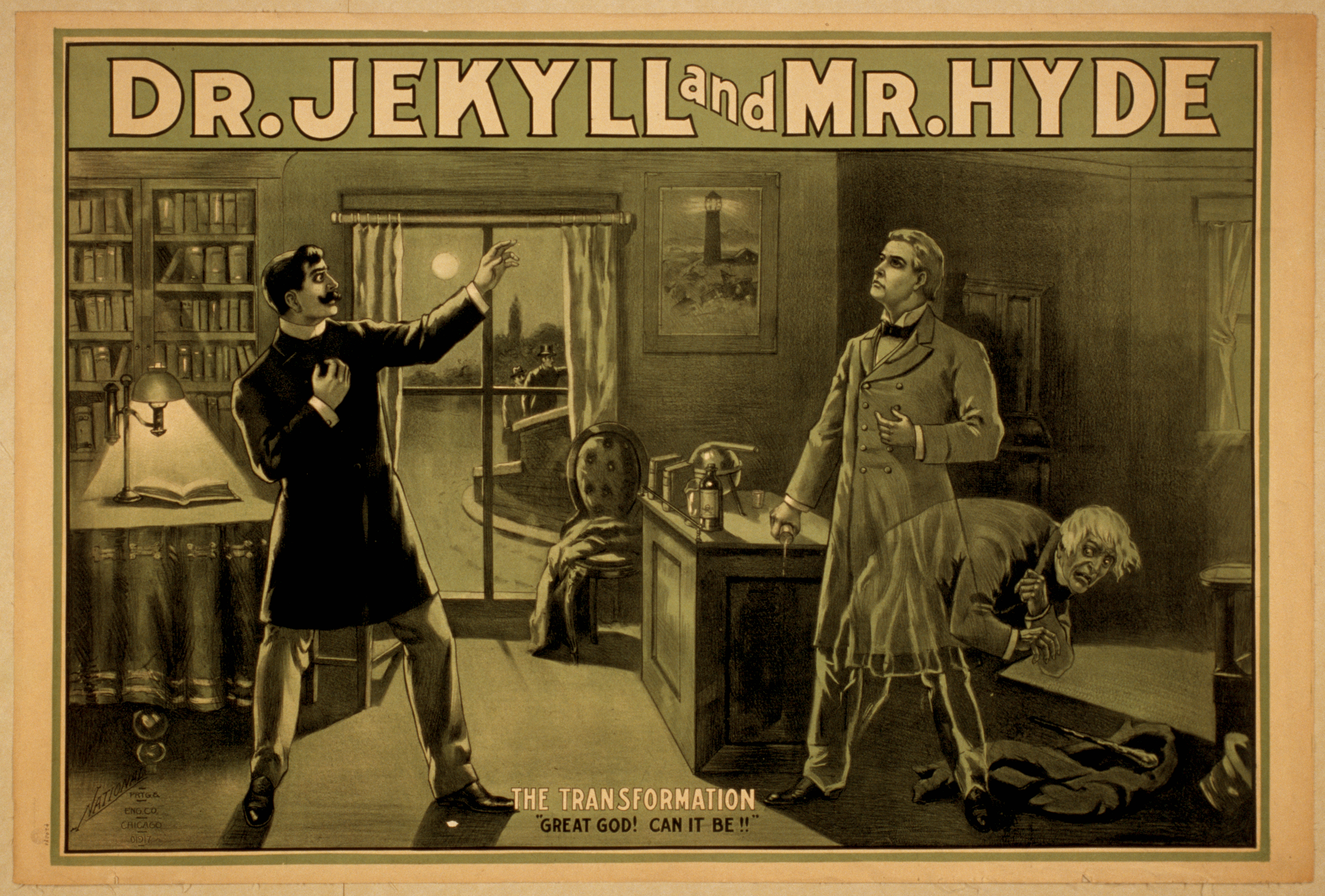
I'd never read Dr Jekyll and Mr Hyde. It's one of those books where you think you know the plot and the characters and everything, but you've never actually sat down with any of them. I'm pretty sure I've never even watched a movie version, being of a delicate persuasion as far as horror goes. (The hard-core aficionados among you are now snorting scornfully. "Call THAT horror?!" you cry. Sorry.) BUT I needed a book to fill a particular length of time before going away - I needed something to read that wasn't any of the pristine, unstarted books I was leaving with but something I wouldn't have to leave behind still only partway through. And so I chose "The Strange Case of Dr Jekyll and Mr Hyde".

And before I'd finished the first chapter I came across the following speech by Mr Richard Enfield, "the well-known man about town". (No, I hadn't heard of him either, but I move in fairly modest circles.) He is talking about asking questions. He doesn't hold with doing that. Too dangerous, he thinks ...

"You start a question, and it's like starting a stone. You sit quietly on the top of a hill; and away the stone goes, starting others; and presently some bland old bird (the last you would have thought of) is knocked on the head in his own back garden and the family have to change their name."

And as I read I thought, "That sounds so familiar. That sounds just like my job. That sounds just like writing stories." It really is like that, at least sometimes, isn't it? That sense of avalanching ideas, unexpected heroes, realities lurching into existence and then it being UNTHINKABLE that they should ever not have been. Gravity is as nothing to a story on a roll. You can no more argue with it than you can argue with, say, a sullen teenager.

It does make me a bit nervous about gardening, though.

Visit my website.
Visit my blog.


Sabtu, 18 Juli 2015

Battles, kings and elephants. Cindy Jefferies


One thing you can depend on for a writer is that if you ask them what they're thinking , whatever they reply you can be pretty certain that at least a part of their mind is thinking about a story. It might be no more than a slight itch at the back of the mind, but it'll be there.

So, being a writer, it is hardly surprising that when I was in Paris in the Spring stories were taking up a corner of my mind. After all, even a desert can be fertile ground for a story, which makes ideas for fiction seep out at every turn in Paris.

Fortunately, the friend I was staying with understood, and on the last day of my trip came up with something for me to take home. It was a quote in the frontispiece of a novel by Mathias Enard called Parle-leur de batailles, de rois et d'elephants.

Puisque ce sont des enfants, parle-leur de batailles et de rois, de chevaux, de diables, d'elephants et d'anges, mais n'omets pas de leur parler d'amour et de choses semblables.

Here's a translation:- Because they are children, tell them about battles and kings, horses, devils, elephants and angels, but don't neglect to tell them about love and things like that.

Not being able to find an attribution I assumed the author must be Mathias Enard, but I wished that I knew for sure.

I loved the quote. It seemed to sum up exactly what I thought was important. Yes, of course a fast moving plot is paramount, especially in the sort of fiction for the 8-12's that I usually write. But, and I think this is particularly important for boys; love, and things like that is also vital. Girls tend to be better at talking about feelings, while some boys, I think, can find it harder. Of course, both boys and girls can feel pretty lonely at times, when what they're feeling is muddled and difficult. I believe that one of the best ways of understanding that you're not alone in your feelings is through a good story. So the quote resonated with me, whoever had written it. But the story doesn't end here.

Some while later, a review from an American newspaper fell into my inbox. It was a glowing review of a new novel that had been in the final selection for the Prix Goncourt in France. It was being translated, and would soon be available in America. To my delight the book was the very one that had contained my favourite quote, and at last I found out what I wanted to know.

The reviewer wrote that the quote came from one of my own countrymen, Rudyard Kipling, in a collection of stories published in 1915 called Life's Handicaps. It's a little known collection, but I tracked it down, and found those wise words in the preface of that book, which takes the form of a discussion between two storytellers, one an elderly Indian who speaks his stories, and the other an Englishman, who, like Kipling writes with pen and ink. The discussion is about the art of storytelling, and the wise words come from Gobind, the holy, one eyed Indian.

And so, the quest for an author led me on a long journey, from England to Paris and back again, and across the Atlantic, with a nod to India, only to find that in true and pleasing storybook form, the answer lay in my own land.

I'd love to hear about your favourite quotes, and why they are special to you. I have mine pinned up by my desk, and my eyes are drawn to it often, as I ponder the twists and turns of the story I am conjuring from behind my eyes. And I will try never to forget to include at least something about love, and things like that.


Jumat, 12 Juni 2015

Rituals and e-visiting old friends - Celia Rees


The other day, a student asked me if I had any particular rituals associated with my writing. I was about to answer, 'No, not really,' in a lame kind of way, when I realised that I do, I just never thought of them that way, that's all. I collect things. Some objects are almost talismans, others are just fun - like the models that make up the interesting Pirates! tableau. I have witches in all sizes from big, to very small with flashing eyes, that belong to Witch Child; models of pirates, ships, flags, eye patches, pencil case, t shirts (Pirates! - what else?); a tricolour rosette I bought in Paris (Sovay) and various jesters for The Fool's Girl. I don't stop when the book is finished - the Lego pirate ship was free with last week's News of The World and I always give money to street performers because of Feste.

Perhaps the reason I go on collecting is because books are never really finished. The characters stay with you long after the book has been published. You've lived with them for a long time, they are part of you, like memories and people from your real life. I realised this when I re-visited Pirates! recently. This was a stand alone book, published in 2003, no sequel planned, so none written, but that didn't stop me wondering, speculating about what happened next, so when I was invited by a blogger, who was having a pirate month in May, to write a piece for her website, I thought, why not?


She wanted it to be called a The Brawl in Triton's Tavern. I've had stranger requests. I decided to write an episode from Pirates! 2, the phantom sequel. As soon as I began to write, the characters and their voices were back again. It was like visiting old friends. The result can be seen http://vvb32reads.blogspot.com/2011/05/tritons-tavern-brawl.html

It was fun. I might go back there again for a longer visit. Who knows? In these days of e books and kindle, we can write what we like, what we want to write, not what is asked of us by publishers.

Jumat, 05 Juni 2015

Day-Glo and the Seven Firemen – Michelle Lovric


The fire-engine screams down the street at midnight, lights flashing. It disgorges a squad of London’s finest. Suddenly, we can smell something burning. Our two-hundred-year-old wharf is a timber-framed – so my husband gets up, dresses and rushes down to the street to investigate.

Ten minutes pass. Suddenly I hear manly voices and heavy footsteps on the fire escape. Then seven firemen thunder into our bedroom. I am still in bed with the cat, wearing the most abbreviated form of sleep attire and immersed in the excellent Beswitched, whose day-glo holographic cover (WHY, for a book set mostly in 1935?) glitters chavishly in the lamplight.

‘Evenin’, ma’am,’ chorus the firemen. The cat pokes her head out from under the sheets to give them a withering look and a long, sour miaow. I try to turn Beswitched over, but the back cover is just as bright.

The guys examine every crevice for fire. There’s nothing smouldering, except me.

‘Nighty-night. Sweet dreams! Fine cat you’ve got there!’ They thunder back down the stairs.

Actually, the real story is that my husband loyally prevented the firemen from entering our bedroom. As he said, ‘I still don’t feel I know you well enough to guess how you’d take it if I let seven men into the bedroom with you wearing that.’ (Mr and Mrs Morrison have been married ten years, though only my mother-in-law refers to me as ‘Mrs Morrison’.)

‘But you SHOULD have let them in,’ I cried, ‘because then I could have written about it!’

‘What’s stopping you?’ my husband grinned.

And indeed this is the difference between life and writing, or, to put it another way, between blogs and books. Life – and blogs – are feral, rarely pondered deeply. Most blogs are no more calculated than a sneeze, no more rehearsed than a scream. Because real life generally offers roads timidly not taken, and glimpses – from the sidelines – of major excitement and visceral danger.

Writing, on the other hand, offers an opportunity to regain lost opportunities, pursue every what-if, make hay even if the sun doesn’t shine all day. Writing is the better version of life – the one you’ve had time to refine, think about, rewrite, run past others, get copy-edited. Writing goes out into the world with its tie straightened, a clean handkerchief, and an apple for the teacher. Writing is also a form of displacement activity – but not in the usual sense. Writing allows you to take a real feeling or an incident and place it in an entirely different context, one in which it can work for you and your story.

I won’t forget the agony of my nearly-naked embarrassment when I thought seven firemen were truly about to storm into the bedroom and find me, the cat and the day-glo cover. Should I jump out of bed and make a dash for the bathroom … or should I cower under the covers? And that huge squirm, physical and mental, will eventually make its way into a book, maybe set a hundred years ago, maybe five hundred, maybe in London, maybe in Venice, maybe in Tasmania. It may be felt by a twelve-year-old girl, or a mythical creature.

The experience will be valid, in all those contexts, but only if it’s written well enough to convey its dreadfulness. The secret of the success of Bridget Jones’ Diary is that it is entirely made of such squirms. I see a lot of firemen and a lot of day-glo in Helen Fielding’s past, oh-so-cleverly recontextualized and harnessed into a best-seller.

For the moment, ‘Day-Glo and the Seven Firemen’ is just a kind of demi-monde blog, not quite the truth and not quite real writing, suspended between truth and fiction. Undigested material, like the little bones in an owl-pellet. Something to poke at with a stick, before proceeding on your way. But the book version – should it happen – will, one hopes, eventually end up on a shelf in a home, where it might earn its keep. At least until the next car boot sale, anyway.

Blogs have their hour, or their day. Books earn their years, or even generations.


PS. Sorry to post in advance. Tomorrow morning early I have to go to the lunatic asylum on the island of San Servolo. Really. Life-really, not blog-really. Though I’m not ruling out a blog either …

LINKS
Michelle Lovric’s website is at www.michellelovric.com
See the new video trailer for The Undrowned Child and The Mourning Emporium on YouTube

Minggu, 19 April 2015

Flaming stories: N M Browne


I love this http://hyperboleandahalf.blogspot.com/
and it seems to me that it exposes the essential fearfulness of some of us writers. Don’t get me wrong I am right up there with the biggest cowards. It is my fear that fuels my fiction: fear of the dark and the weird things in it, fear of sharp objects, fire and flood, fear that I will fail to keep my children safe, fear of all the world might throw at them.

I am a primitive creature squatting by my fireside in the darkest of nights telling stories to hold back the shadows. I don’t believe in sympathetic magic: I know that battles won in fiction where courage, faith and honour are rewarded, do not mean that battles will be won in life. I know that keeping my heroes safe (ish) will not protect my loved ones. I know that I am not heroic because my characters are heroic. I know all this and yet somehow I still believe that in some small way the stories do hold back the dark.

Perhaps by acting out my fears on paper I am a little less neurotic in life, perhaps even a little bit braver? For how do we learn about courage except from stories about the courageous?
How do we come to believe that right can prevail except through those tales in which it does?

I absorbed a lot of my moral values from my own childhood reading, from Reepicheep and Biggles as much as from Jo Marsh and Anne of Green Gables. (This probably accounts for some of the more bizarre inconsistencies in my personality.)
In their various ways all the fictional characters that live in my head have shown me ways to be and not to be, given me choices. In my fiction even my most confused and uncertain characters choose, in the end, to hold back the shadows.

It would be nice to think that fearful as I am, readers see not the horrors but the victories in my fiction, that they see the courage of my characters not the cowardice of the writer. Maybe you have to fear the dark to evoke it with any conviction, dread it in order to overcome it with any sense of triumph?

Rabu, 08 April 2015

Magic Moments by Lynda Waterhouse

The story I am working on is called ‘Magic Moments and the Dull Bits in Between.’ I have no publishing contract as yet but this story has been lurking in my imagination for some time itching to make a break for it. In these difficult and uncertain times I have got nothing to lose. Instead of giving in to despair about the state of the publishing world I am recklessly writing from my heart and giving my publisher-pleasing- grateful-to- be- published- persona a rest in order to allow my rebel voice free rein. And what a feisty dame she is turning out to be. Yesterday she rewarded me with a Magic Moment. I was writing a scene where one of my characters is opening up an old suitcase from 1976. I thought I knew what was inside it but as the character opened the case something else happened. The case clicked open on cue and my character reacted as I'd planned but then I noticed something else. There was the faint smell of a perfume. My character breathed in and so did I and KAPOW a name was summoned up from the back catalogue of my life and that name was…..Aqua Manda.
Image from Amersham Museum website

I hadn’t consciously being trying to write about anything olfactory. I had been too taken up with the objects inside the case; the Phoom dress, the copy of Jonathon Livingston Seagull and the journal. But there was now the distinctive orange smell of Aqua Manda to deal with. A fragrance I had not thought of in decades but which had returned to my memory at exactly the right moment that it was needed. After the smell came the memory of the bright art nouveau style packaging and the small blue bottle. One Christmas I had received a bottle of Aqua Manda talc and felt that I was truly grown up. My character had glimpsed the past and it smelled of oranges and spices. The hopes and dreams of a sixteen year old girl, the smell of Aqua Manda, the sound of the Real Thing singing ‘You to Me are Everything’ and the long hot summer of 1976. Here’s wishing you all a magic moment in your writing today. Would love to hear all about it...